BIAB, builder gel and rubber base are not interchangeable products, and the best choice depends on how much the natural nail flexes, how long it is, how much structure it needs and how the product is designed to cure. Very flexible natural nails often benefit from a coating that can move with the nail, while short nails that need more reinforcement may suit a soak-off builder gel. Longer nails or nails that repeatedly collapse through the stress area may need a more structured builder system rather than simply a thicker layer of base.
There is also an important terminology point: BIAB™ is The GelBottle’s Builder In A Bottle™ range, while “builder gel” is a broader product category. A salon may casually use “BIAB” to describe a builder-gel manicure even when it uses another brand, but technically those terms are not identical.
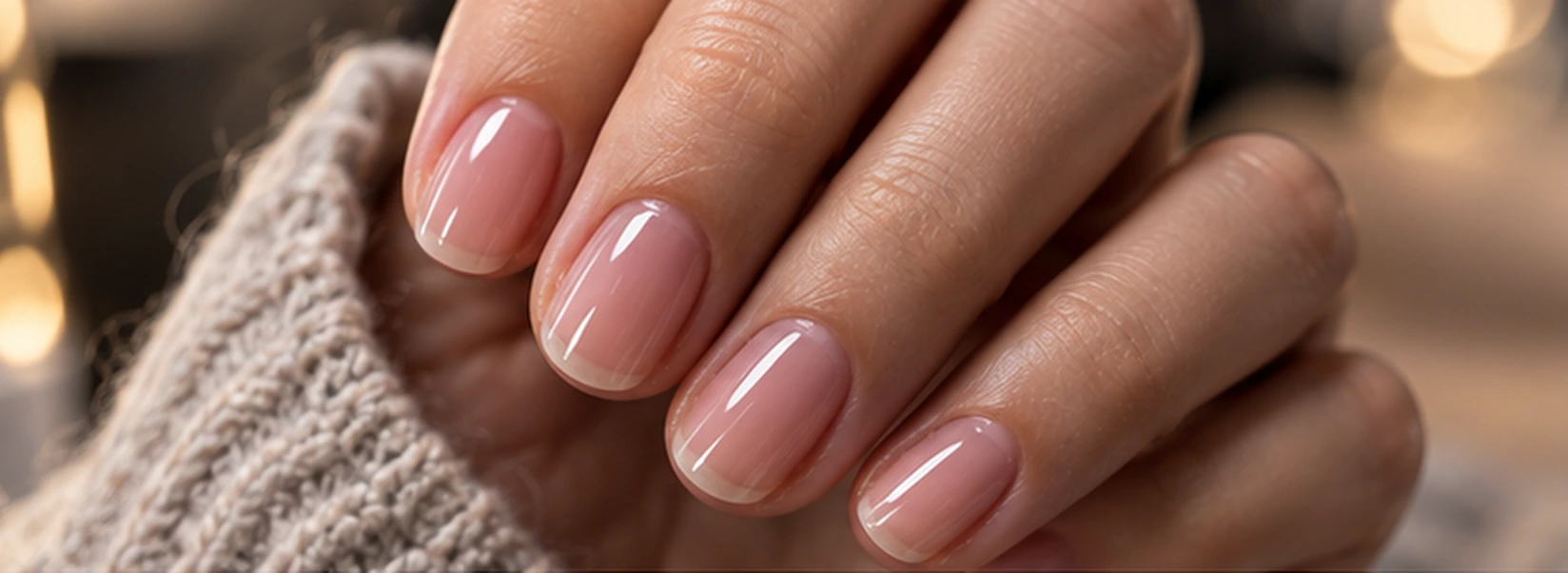
The useful question is therefore not simply “Is BIAB better than rubber base?” It is: which level of flexibility, structure and removal method is appropriate for this particular natural nail?
BIAB vs builder gel vs rubber base: the quick answer
| Product | Typical flexibility | Main role | Often suited to | Usually not the first choice for |
|---|---|---|---|---|
| Rubber base | High | Flexible support and adhesion beneath gel colour | Thin, bendy, short natural nails that need modest reinforcement | Long extensions or heavy structural building |
| BIAB™ / soak-off builder in a bottle | Medium, depending on formula | Structured natural-nail overlay and reinforcement | Short-to-medium natural nails that need more support than a base coat | Very long extensions unless the specific formula is designed for them |
| Builder gel | Varies from flexible soft gel to rigid hard gel | Creating strength and nail structure | Natural overlays, apex building, repairs and extensions depending on formula | Choosing by product name alone without checking the formula |
The biggest mistake is assuming that “stronger” always means “better”. If a coating is much more rigid than a very flexible natural nail, the two layers can move differently under pressure. That mismatch can contribute to lifting, cracking or stress at the natural nail.
What is BIAB?
BIAB stands for Builder In A Bottle. BIAB™ is a trademarked product range created by The GelBottle. The brand describes its original BIAB as a self-levelling builder formula intended for natural-nail overlays and short-to-mid-length nails, with different BIAB formulas now available for different service requirements.
In practical salon language, people often use “BIAB” more broadly to mean a bottled builder-gel manicure. That can be confusing because two salons advertising “BIAB nails” may not be using the same brand, chemistry, viscosity, removal method or level of rigidity.
If you are booking a service, ask the salon which exact product system it uses rather than relying on the appointment name alone.
Is BIAB the same as builder gel?
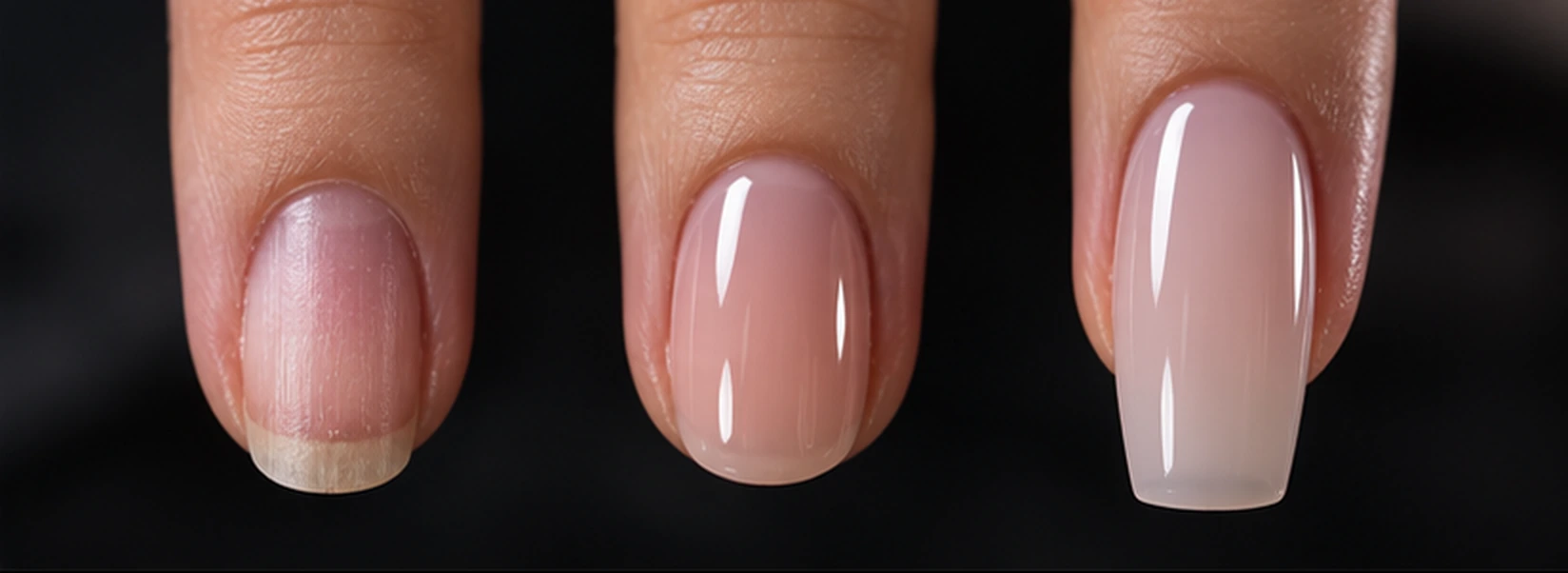
BIAB is a type of builder gel, but not every builder gel is BIAB.
“Builder gel” is a functional category. It describes gels formulated to create more structure than ordinary gel polish. Depending on the formula, a builder gel may be:
- soft and soak-off,
- semi-flexible,
- more rigid,
- file-off,
- supplied in a bottle,
- or supplied in a pot.
That is why comparing “BIAB versus builder gel” is slightly like comparing one specific family of builder products with the entire builder-gel category.
For a broader comparison of stronger enhancement systems, see Hard Gel vs BIAB vs Acrylic in Ireland.
What is rubber base?
A rubber base is a flexible gel base coat designed to provide more support than a very thin standard base while still moving with the natural nail. The word “rubber” describes the flexible behaviour of the cured coating; it does not mean that ordinary rubber is being applied to the nail.
Rubber base is particularly associated with natural nails that are thin, weak or flexible. Its role is usually to improve the relationship between the moving natural nail and the gel system above it rather than to create the same structural architecture as a true builder product.
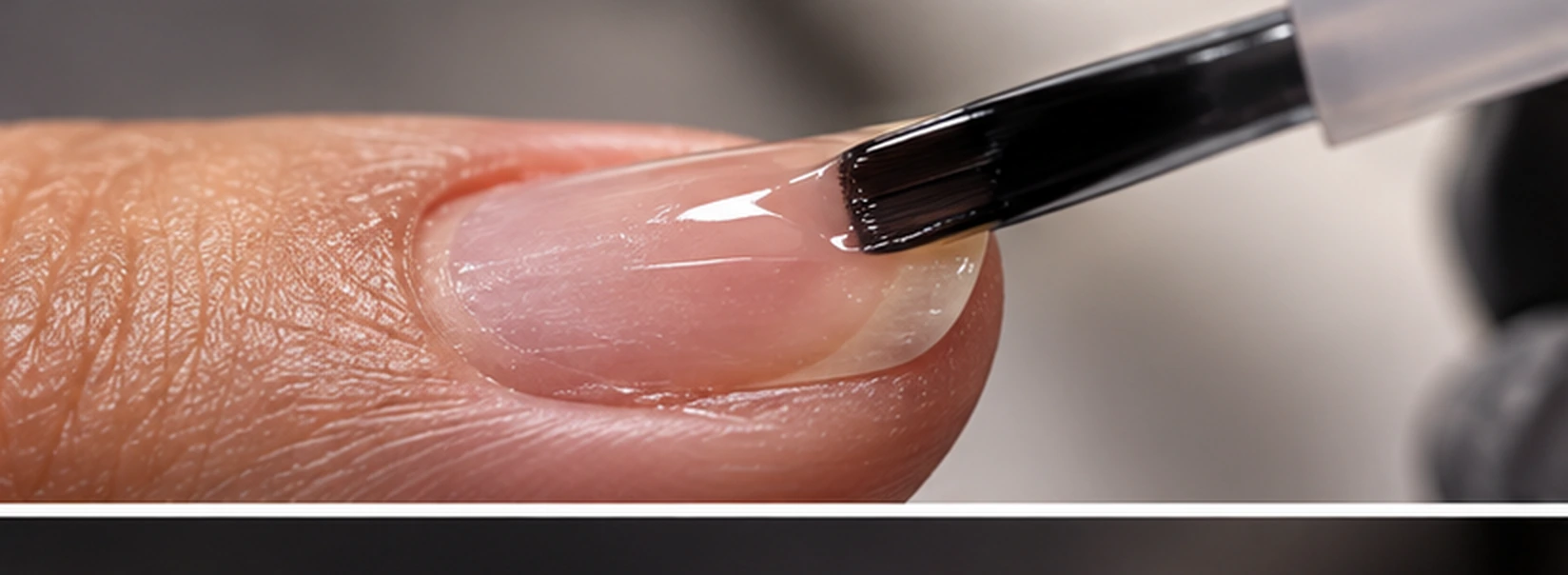
A rubber base may be useful when a natural nail flexes enough that a more rigid coating repeatedly lifts. It is not automatically the correct solution for every weak nail, and it should not be treated as a substitute for a structural gel when significant length or architecture is required.
Which is best for very flexible natural nails?
For a very flexible natural nail, a flexible base or appropriately flexible builder system is often more logical than choosing the hardest possible coating.
The reason is mechanical. A natural nail bends during typing, cleaning, opening packaging and ordinary hand movement. If the nail moves while a rigid coating resists that movement, stress can concentrate where the product is bonded to the nail plate.
That does not mean every flexible nail must wear rubber base. Some short flexible nails need only a flexible base under gel colour, while others need additional structure from a compatible soak-off builder.
The correct choice depends on:
- how flexible the natural nail actually is,
- its current length,
- where breakage occurs,
- whether previous products lift or crack,
- the client’s work and daily hand use,
- and the flexibility of the specific product after curing.
Which is best for thin nails?
Thin nails need careful assessment because “thin” does not always mean the same thing.
A nail can be naturally thin and flexible, or it can have become thinner through repeated over-filing, peeling product off, aggressive removal or other trauma. Those situations should not automatically receive the same service.
A naturally thin, flexible nail may benefit from a flexible base or a controlled flexible builder overlay. A nail that has been significantly thinned or damaged should not simply be hidden under an increasingly thick layer of product.
Adding more gel does not repair lost nail plate. The coating may physically protect the nail while it is worn, but the damaged portion still has to grow out.
Which is best for short natural nails?
Short natural nails are one of the situations where bottled builder gels have become particularly popular.
A short nail may not need an extension, but it can benefit from a small amount of correctly positioned structure. A builder overlay can reinforce the stress area while keeping the free edge relatively thin and natural-looking.
The GelBottle’s current guidance describes Original BIAB™ as suitable for short-to-mid-length natural nail overlays, while other formulas in its range are designed for different strength and length requirements.
However, short nails do not automatically need builder gel. A strong, healthy short nail may wear ordinary gel polish successfully. Product choice should solve an actual retention or structural problem rather than simply adding thickness because a product is fashionable.
What does an apex actually do?
The apex is the thicker structural area of an enhancement or structured overlay. Its purpose is not to create a visibly bulky nail. It helps distribute force across the nail so that stress is not concentrated only at the free edge or sidewalls.
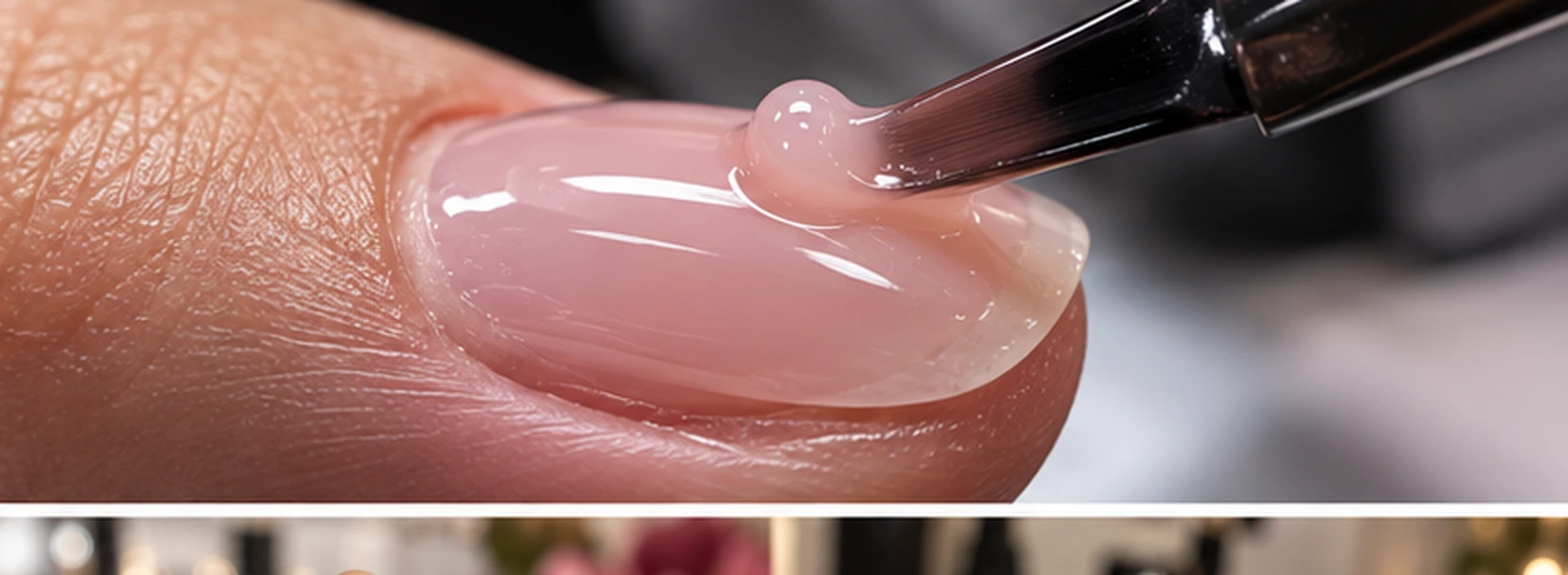
A well-balanced structured overlay is usually:
- thin near the cuticle,
- controlled through the sidewalls,
- slightly more substantial through the stress area,
- and refined again toward the free edge.
The correct structure varies with nail length, shape and product system. A short rounded nail requires a different amount of support from a long square or almond nail.
Does rubber base create an apex?
Some higher-viscosity bases can smooth the surface and provide a small amount of shape, but rubber base should not automatically be treated as a structural builder gel.
NailKnowledge describes rubber base as the more flexible option for natural nails and warns against using it as though it were a heavy structural product. Its flexibility is useful precisely because it is intended to move more readily with the natural nail.
If a nail requires substantial architecture, repeated repairs or significant added length, a technician should select a product designed and tested for that structural job.
What is the difference between soft builder gel and hard gel?
This distinction matters because the word “builder” alone does not tell you how the product behaves.
Soft or soak-off builder gels are designed to provide structure while retaining some flexibility and can usually be removed with an appropriate soak-off process when the manufacturer specifies it.
Hard gels form a more rigid structure and generally need to be filed rather than soaked away. They are often selected when more architectural support, longer extensions or greater rigidity is required.
Neither category is automatically superior. The product has to suit the nail underneath and the service being created.
Why more rigidity can sometimes make retention worse
It is easy to assume that a nail which keeps breaking needs the hardest product available. In reality, the relationship between coating and natural nail matters.
Imagine a very flexible natural nail under a highly rigid coating. During ordinary movement, the natural nail attempts to bend while the coating resists. If the stresses exceed the bond or the structure is poorly matched, lifting can begin.
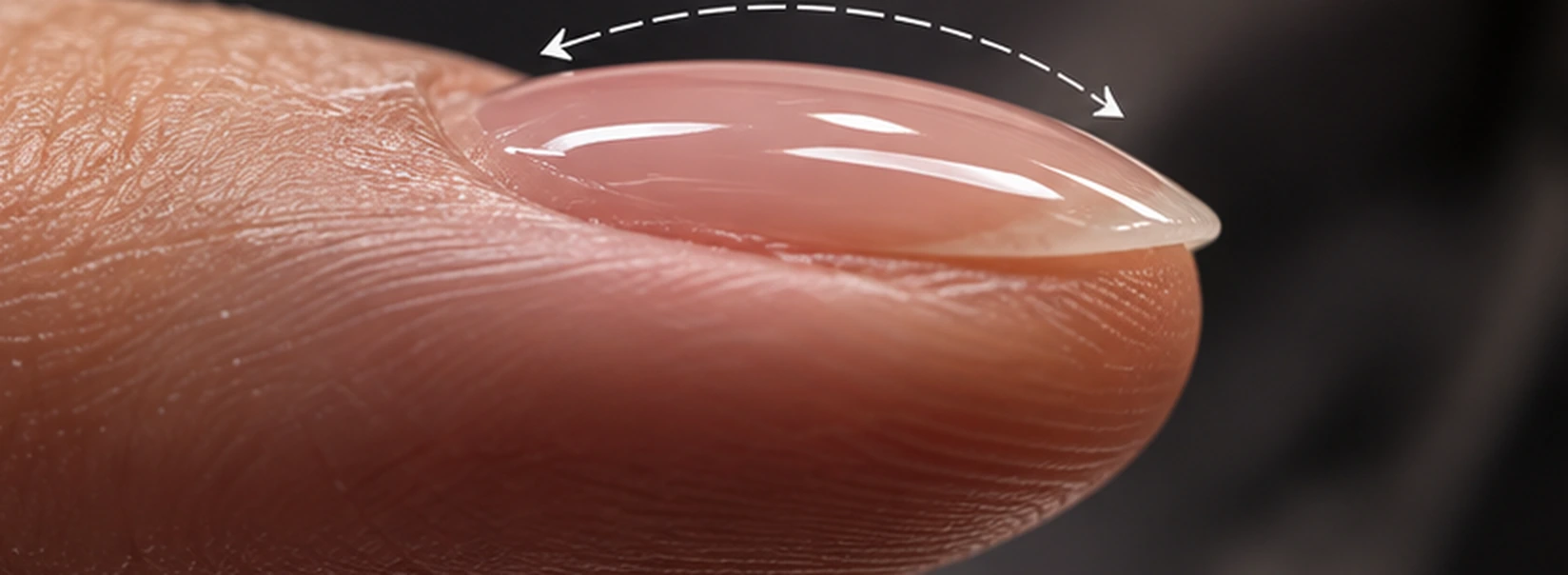
The opposite problem can also occur. A highly flexible coating may not provide enough support for a long natural nail that experiences substantial leverage.
This is why the most useful question is not “Which gel is strongest?” but “How much movement and structure does this nail need?”
Can BIAB help natural nails grow?
BIAB and other builder overlays can help some people retain length because the coating provides physical support and can reduce everyday breakage while it is worn.
That is different from claiming that gel makes the nail itself grow faster or permanently changes the biological strength of the nail plate.
Natural nail growth occurs from the nail matrix. A coating can protect the length that has already grown, but the result still depends on application, maintenance, removal and the condition of the natural nail underneath.
BIAB vs rubber base for bendy nails
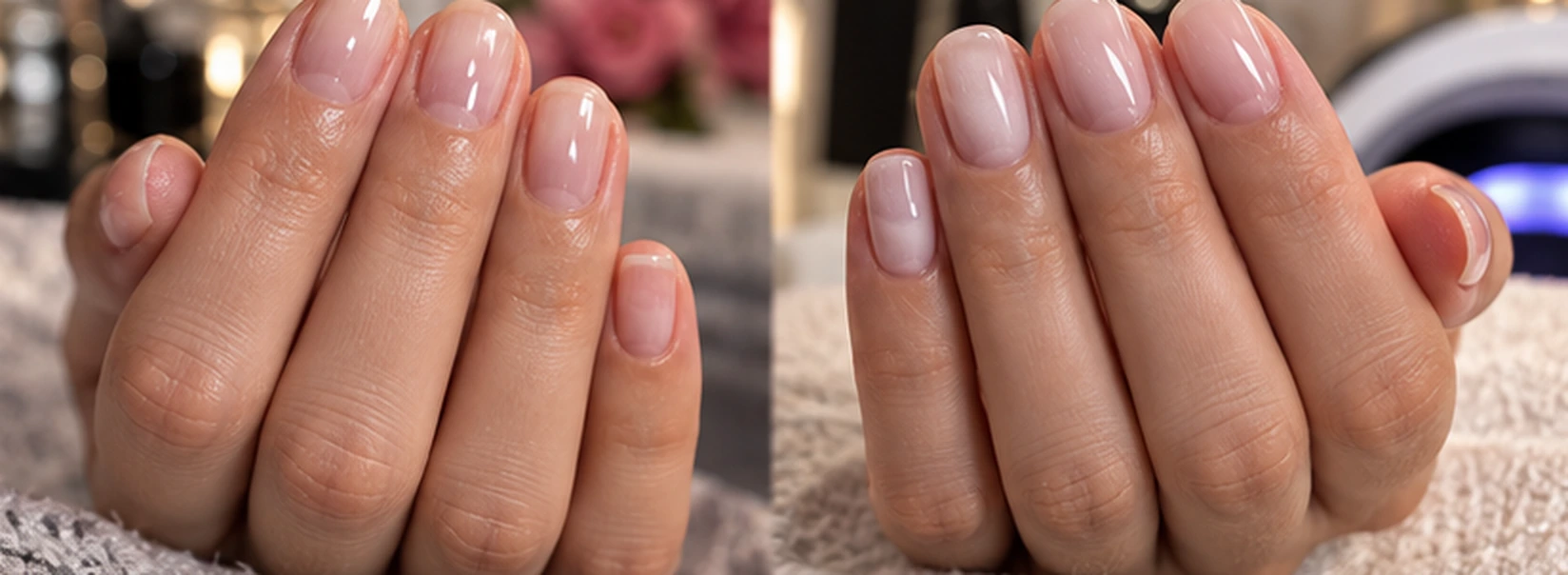
For a short nail that bends significantly, rubber base may provide enough flexible reinforcement under gel colour. If that same nail still breaks through the stress area or needs more shape, an appropriately flexible builder may provide additional support.
| Situation | What may be considered | Why |
|---|---|---|
| Very short, very flexible nail | Flexible or rubber base | Moves more closely with the natural nail |
| Short nail that needs more reinforcement | Soak-off builder / suitable BIAB formula | Adds controlled structure and stress-area support |
| Medium-length nail with repeated stress cracks | More structured builder system | Can provide a stronger apex and greater architectural support |
| Long extension | Builder or hard-gel system designed for extensions | Requires product specifically intended to support additional length |
| Over-filed, painful or visibly damaged nail | Assessment before another overlay | More product is not a substitute for addressing nail damage |
BIAB vs rubber base for thin nails
If thin nails are also highly flexible, a rubber base can be a logical starting point because it provides support without forcing a rigid structure onto a moving nail.
If thin nails are short but repeatedly split or collapse through the centre, a builder overlay may be selected to create additional structure. The important part is that the technician does not compensate for weakness by applying excessive thickness.
Very thin nails can also feel heat more intensely during polymerisation. If builder gel feels sharply hot under the lamp, tell the technician immediately. For more detail, see Why Does Builder Gel Burn Under the Lamp?
Can BIAB be applied too thickly?
Yes. Builder products are designed to create structure, but that does not mean unlimited thickness is safe or useful.
The amount of product that can cure correctly depends on its formulation, pigmentation, lamp, exposure conditions and the manufacturer’s instructions. A surface that feels hard is not proof that the entire depth has polymerised as intended.
Excessive thickness can also create:
- unnecessary bulk,
- poorly balanced structure,
- stronger heat spikes during curing,
- extra leverage on the natural nail,
- and greater difficulty during maintenance or removal.
Does lamp choice matter for BIAB, builder gel and rubber base?
Yes. The correct lamp is part of the gel system.
UV/LED nail products cure when their photoinitiators receive the appropriate light energy. Wattage alone does not tell you whether a lamp is suitable for a specific product.
The British Association of Dermatologists has warned that insufficient curing and uncured product contacting the skin can increase the risk of sensitisation to methacrylates. Manufacturer instructions for lamp compatibility, layer thickness and curing time should therefore be treated as part of the service rather than optional suggestions.
Is HEMA-free automatically allergy-free?
No. “HEMA-free” means that a product does not contain HEMA, but nail gels can contain other acrylates or methacrylates capable of causing sensitisation.
The most important precautions remain:
- avoid uncured product touching skin,
- use products within their intended system,
- use the recommended or validated lamp,
- apply within the manufacturer’s thickness guidance,
- and stop covering unexplained skin or nail reactions with more product.
If there is persistent redness, itching, swelling, blistering, nail separation or another unexplained reaction, the priority is medical assessment rather than changing to a different gel and continuing application.
Should BIAB be completely removed at every appointment?
Not necessarily. A sound builder overlay can often be maintained by reducing length, removing lifted or excess product, restoring the structure and adding new growth-area product according to the system being used.
However, a refill should not simply cover existing problems. Significant lifting, cracks, trapped discolouration, pain or unknown product from another system may make partial or complete removal more appropriate.
See Can You Put Gel Polish Over BIAB? Colour Changes, Refills and What Happens at Your Appointment for more on maintenance and colour changes.
When is rubber base a better choice than builder gel?
Rubber base can be the more appropriate option when:
- the natural nails are short and very flexible,
- only modest reinforcement is required,
- the main goal is improving support beneath gel colour,
- a previous rigid coating repeatedly lifted as the nail flexed,
- and the selected base is specifically recommended for that nail condition.
It should not be chosen simply because “rubber base” sounds gentler. The exact formula and its compatibility with the rest of the system still matter.
When is builder gel a better choice than rubber base?
Builder gel can be more appropriate when:
- the natural nail needs a defined stress area or apex,
- the client wants to retain more natural length,
- short cracks or broken corners need professional structural repair,
- the nail shape needs controlled correction,
- or the service includes extensions that the selected builder is designed to support.
The word “builder” still does not tell you whether the product is flexible, rigid, soak-off or file-off. The technician needs to know the characteristics of the exact formula.
When is BIAB a good choice?
BIAB can be a good option when a client wants a natural-looking structured overlay on short-to-medium natural nails and the chosen BIAB formula matches the nail type and lifestyle.
The popularity of this type of manicure also fits the wider 2026 shift toward shorter, natural-looking and lower-maintenance nails. ELLE highlighted BIAB manicures as a major 2026 trend, particularly for natural-looking overlays that can be worn sheer or used as a base for understated nail art.
Popularity, however, should not determine the technical choice. A product that works beautifully for one client’s nails may lift, crack or feel unnecessarily rigid on another.
What should you ask your nail technician?
If you are unsure whether to book BIAB, builder gel or a rubber-base manicure, useful questions include:
- What exact product will be used?
- Is it a flexible base, soak-off builder or hard gel?
- Is this product intended for my current nail length?
- Does it require a separate base?
- Can it be soaked off or does it need filing?
- Which lamp is specified for the system?
- Would you refill this product or remove it completely next time?
- Why is this formula suitable for how flexible my nails are?
A professional recommendation should be based on the condition and movement of the natural nail, not simply on which service name is currently most popular.
Frequently asked questions
Is BIAB better than rubber base?
Neither is universally better. Rubber base is generally more flexible and suited to natural nails needing modest support, while BIAB-style builder products provide more structure. The better option depends on nail flexibility, length and the service required.
Is BIAB the same as builder gel?
BIAB™ is The GelBottle’s Builder In A Bottle™ range and is a type of builder gel. Builder gel is the wider product category and includes many formulas and brands.
Is rubber base a builder gel?
Rubber base is primarily a flexible base-coat product. Some formulas can smooth and lightly reinforce the natural nail, but they should not automatically be treated as structural builder gels.
Is BIAB good for flexible nails?
It can be, depending on the exact BIAB formula and how flexible the natural nail is. Very flexible nails may require a more flexible system, while nails needing greater structure may benefit from a builder overlay.
Is rubber base good for thin nails?
A flexible rubber base can suit naturally thin, bendy nails when only modest reinforcement is needed. Thin nails that have been damaged by over-filing or traumatic removal should be assessed before simply adding more gel.
What is best for short natural nails?
Healthy short nails may need only gel polish. Short nails needing extra support may suit rubber base or a soak-off builder overlay depending on how flexible they are and where they tend to break.
Does builder gel make natural nails stronger?
Builder gel reinforces the nail while the coating is worn and may help the client retain length by reducing breakage. It does not permanently change the biological structure of the natural nail.
Can rubber base be used on long nails?
Length increases leverage. A long nail that needs significant structural support may require a builder system designed for that job rather than relying on a flexible base alone.
Can builder gel damage nails?
The gel itself is only one part of the service. Excessive filing, peeling product off, poor removal, inappropriate structure, skin exposure to uncured gel or incorrect curing can all create problems. Correct application and removal are therefore critical.
The best product matches the movement of the nail
The most useful way to compare BIAB, builder gel and rubber base is not by asking which one is hardest. The goal is to match the coating to the natural nail’s flexibility, length, structure and daily mechanical load.
A very flexible short nail may perform better with a flexible base. A short-to-medium nail that needs more support may benefit from a soak-off builder or BIAB-style overlay. A longer nail or extension may require a more structural builder or hard-gel system.
Correct product selection should then be combined with controlled thickness, balanced structure, compatible products, the correct curing lamp and careful maintenance. That combination matters more than the product name printed on the appointment menu.
If you want professional advice based on your own nails, you can browse nail salons and nail technicians across Ireland on Nails Ireland.
Sources
- The GelBottle — Find Your Formula: The Ultimate Guide to BIAB for Pro Nail Techs
- NailKnowledge — The Truth Behind Rubber Base and BIAB: Marketing vs Chemistry
- NailKnowledge — What Is a Rubber Base Coat?
- ELLE — The Best BIAB Manicure Trends for 2026
- British Association of Dermatologists — Artificial Nail Allergy and Methacrylate Safety Warning