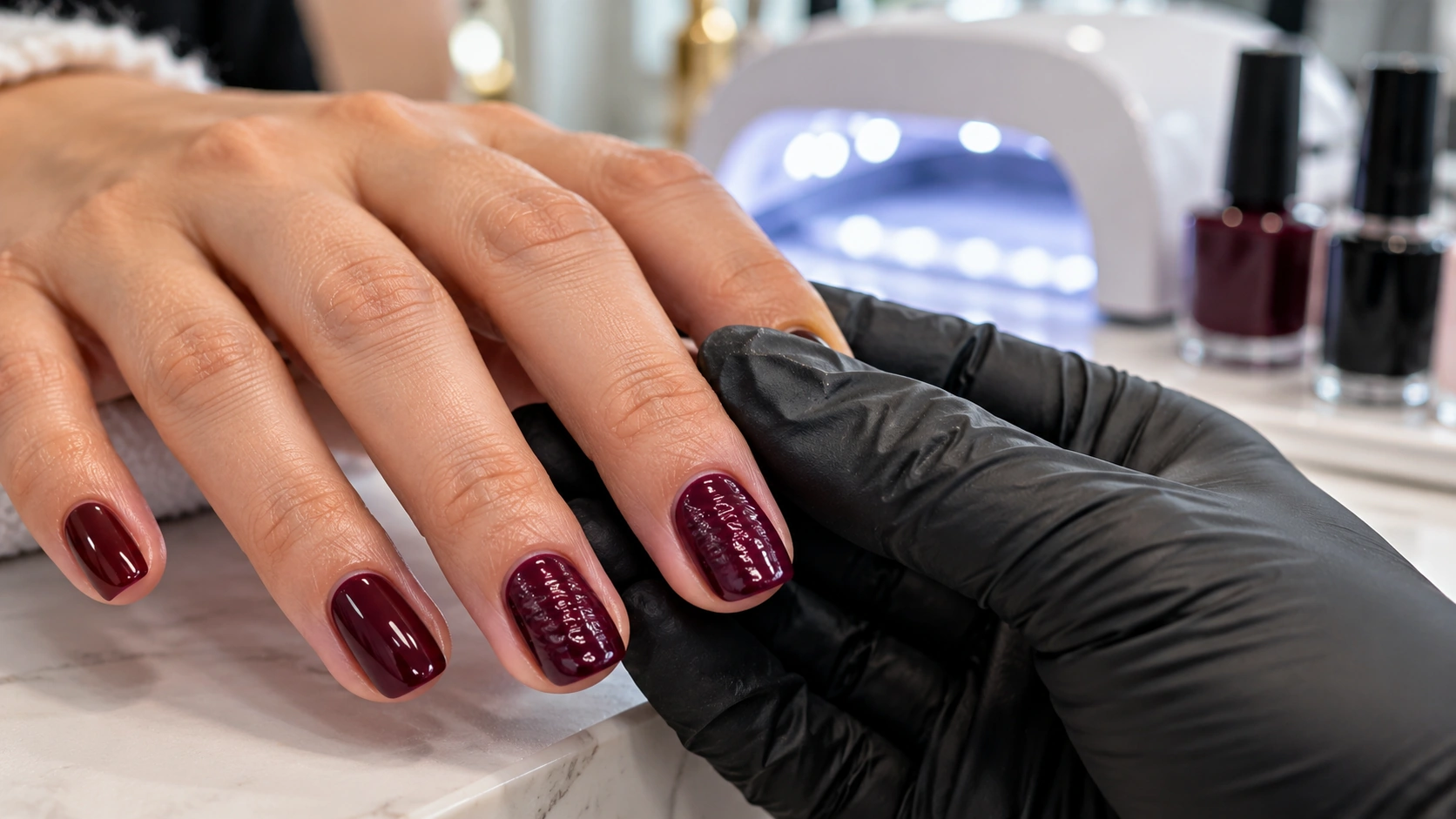
If gel polish looks wrinkled, rippled or folded after a lamp cycle, the colour layer may not have cured evenly and should not simply be covered with more top coat. A surface that has hardened while material underneath remains soft is a particular concern. Thick application, highly pigmented shades, incompatible lamp settings or incorrect curing instructions can all contribute. The safe response is to stop, assess the affected layers using the product manufacturer’s guidance and correct the application rather than filing or sealing over uncertain material.
What do gel-polish wrinkles actually look like?
Wrinkling may appear as tiny creases on a dark colour, a raised ripple near the sidewall, a puckered patch after removing the hand from the lamp or a soft area under a glossy surface. It is different from a brush mark in an uncured layer and from a small dent caused by touching polish before curing. Sometimes only one nail is affected because the colour was applied more thickly there or that finger was poorly positioned under the light.
Colour and finish matter. Dense black, white or heavily pigmented gel colours can need especially careful application according to their system instructions. The problem is not proof that all dark gels are defective.
Why a thick layer can remain soft underneath
Gel polish is designed to cure through a specific light-activated chemical process. A layer that is much thicker than the manufacturer specifies may block sufficient light from reaching the full depth, even when the surface appears firm. Applying a second coat before the first has cured properly can make the problem worse. Wrinkling is therefore a useful warning sign, not a decorative texture to be smoothed away with another layer.
Peeling from the nail tip can have different causes, such as preparation or movement of the natural nail. The distinction is discussed in the guide to gel polish peeling at the free edge. Wrinkling after a lamp cycle needs its own investigation of film thickness and curing conditions.
Lamp compatibility is more than an advertised wattage
The relevant questions include the gel manufacturer’s recommended lamp, its light characteristics, the required exposure time and the placement of the nails. A label claiming high wattage does not, on its own, establish that the lamp cures every formula. Older lamps, unsuitable replacement units or changes between product systems may produce unreliable results.
Clients should not be asked to decide the curing schedule. A nail professional needs to follow the product instructions and use a compatible, maintained lamp. Extending the time without evidence that the lamp and material work together is not a reliable substitute for proper compatibility.
Hand placement can make one nail different
Thumbs are especially prone to being angled away from the intended light field when the whole hand rests flat. A fingertip placed too far from the lamp’s effective zone may receive less light. Professionals should position fingers as instructed for the device and follow any separate thumb-curing recommendations from the manufacturer.
False nails, large decorations and unusual nail shapes can also create shadows. Apply products within their permitted thickness and use the curing method intended for the specific system rather than assuming that any LED lamp will behave identically.
What should a salon do when the surface wrinkles?
- Stop adding product to the affected nail.
- Check the gel name, colour, batch information and curing instructions.
- Assess whether the entire affected application must be removed according to the system’s safe removal procedure.
- Avoid pulling partially cured material across the skin; use appropriate protective practices and trained removal methods.
- Inspect the natural nail and surrounding skin before deciding whether a new application is appropriate.
- Reapply only with a compatible system, controlled thin layers and correct lamp positioning.
The correct steps for a builder base beneath colour differ from those for gel polish on bare natural nails. The relationship between base structure and colour layers is addressed in the guide to applying gel colour over BIAB.
What if the skin feels itchy or irritated?
Uncured or insufficiently cured nail products can increase exposure to ingredients that may trigger irritation or allergic contact dermatitis in susceptible people. Itching, swelling, redness, blisters or persistent soreness should not be dismissed as normal curing discomfort. Stop exposure and seek appropriate medical advice, particularly when symptoms persist or spread.
A salon should avoid diagnosing the cause from a photograph. For a clearer distinction between possible irritation and allergy, see itchy fingers after gel or BIAB treatments. Skin contact with uncured product is something to prevent, not an expected part of a manicure.
Wrinkling, shrinkage and lifting: quick comparison
| Appearance | What it may suggest | Next step |
|---|---|---|
| Rippled colour immediately after curing | Uneven curing, often associated with thick application or lamp mismatch. | Stop and assess the layer; do not seal over it. |
| Colour retreats from the tip before curing | Application control, surface tension or product behaviour. | Check technique and system guidance. |
| Gel lifts days after an appointment | Adhesion, preparation or nail movement issues. | Investigate lifting rather than assume wrinkling. |
| Heat sensation in the lamp | Possible exothermic curing response, often discussed with thicker gels. | Stop if painful and follow product guidance. |
Does more dehydrator or primer prevent wrinkling?
Not usually. Dehydrator and primer address specific preparation or adhesion needs; they are not substitutes for curing the colour layer correctly. Overusing preparation liquids may introduce a different set of problems. The practical roles of these products are explained in nail dehydrator versus primer.
If the colour repeatedly wrinkles despite appropriate thin layers and correct hand placement, investigate compatibility, age and condition of the gel and lamp. Do not invent an extra primer step simply to compensate for a curing failure.
What clients in Ireland can ask at an appointment
Clients do not need to know the chemistry of each product to ask useful questions. It is reasonable to ask whether the lamp is suitable for the gel being used, why a nail is being redone and whether any product came into contact with skin. A professional salon should be able to explain the corrective step without guaranteeing that every product will suit every person.
When moving to a different salon, disclose previous reactions and the type of product used if known. Keep photographs of a visible reaction for a medical professional, but do not reapply suspect products to test whether symptoms recur.
Frequently asked questions
Can top coat hide a wrinkled gel layer safely?
No. A smooth surface does not demonstrate that the underlying colour has cured as required. The problem must be assessed and corrected.
Does every wrinkled colour mean the lamp is faulty?
No. Excess thickness, incompatible products, incorrect hand placement and other application factors can produce similar-looking results.
Is an extra-long lamp cycle always the answer?
No. The system’s instructions govern curing. Arbitrarily increasing exposure cannot be assumed to correct an incompatible lamp or excessively thick layer.