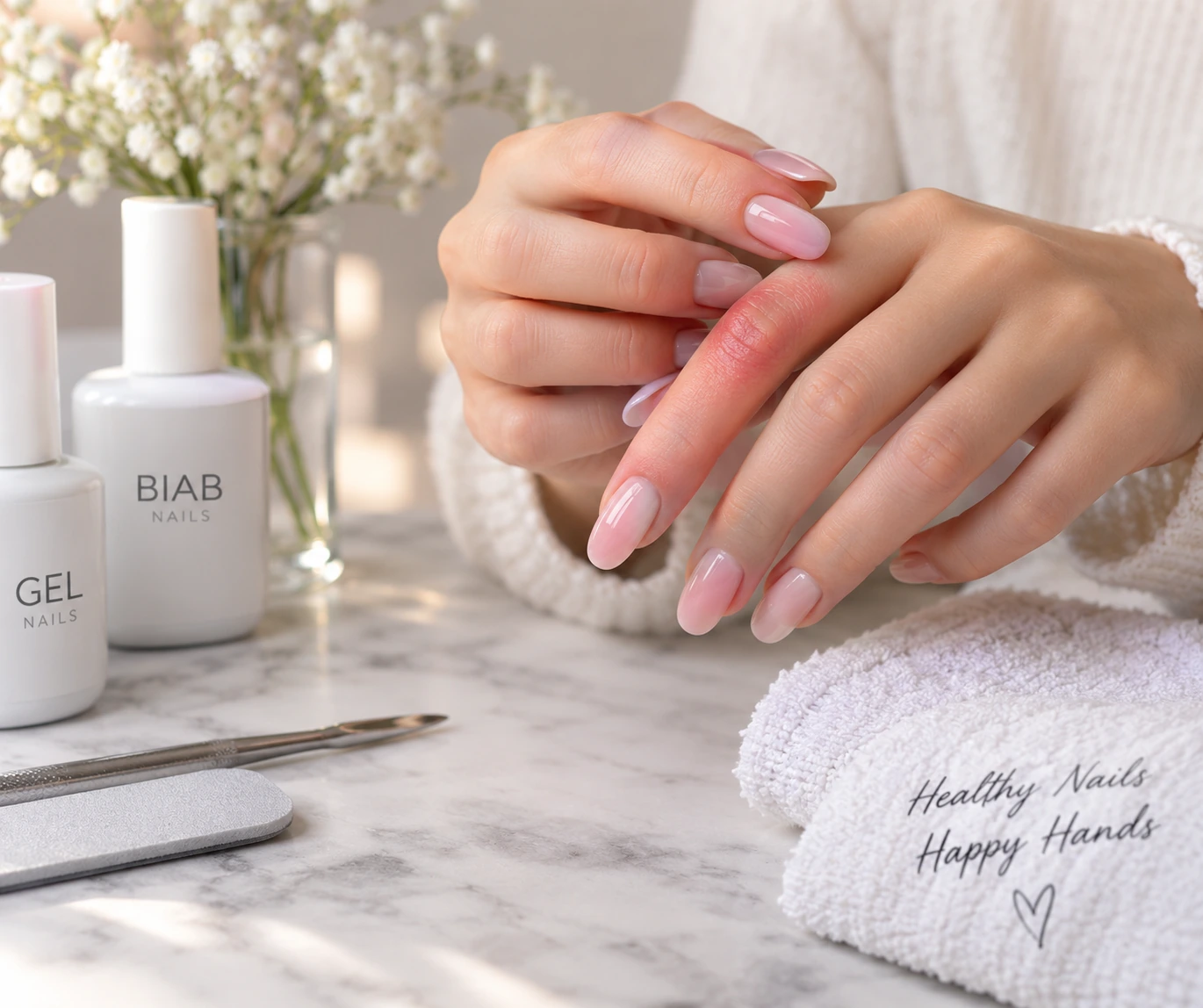
Itching around the fingertips after gel polish, builder gel or BIAB is not something to ignore, especially if it is accompanied by redness, swelling, tiny blisters, cracking skin or soreness around the nail folds. A brief heat spike under the lamp is a different problem from skin that becomes itchy hours or days later.
If the skin around your nails is reacting, do not simply cover the area with another layer of gel. Repeated exposure to uncured or partially cured nail product can make a sensitisation problem worse. Persistent or significant symptoms should be assessed by an appropriate healthcare professional rather than diagnosed from appearance alone.
Allergy or irritation: what is the difference?
Irritant contact dermatitis happens when a substance directly damages or inflames the skin. Allergic contact dermatitis is an immune reaction after a person becomes sensitised to a particular ingredient. Both can cause redness, itching and discomfort, so it is not always possible to tell the difference without medical assessment and, when appropriate, patch testing.
Nail systems based on acrylates and methacrylates can cause skin sensitisation. The risk is especially relevant when uncured product touches the skin repeatedly, when curing is incomplete, or when home application makes skin contact more likely.
What symptoms should make you stop and take notice?
- itching around the nail folds or fingertips;
- red or swollen skin;
- small fluid-filled blisters;
- dry, cracked or peeling skin;
- burning that continues after the appointment;
- nail lifting or inflammation that is not explained by trauma;
- a rash appearing on areas that may have been touched after the manicure, such as the eyelids or face.
Severe swelling, breathing difficulty or a rapidly worsening reaction needs urgent medical attention.
Is a heat spike under the lamp the same as an allergy?
No. Builder products can produce a brief sensation of heat while curing because the chemical reaction releases heat. That is why a short, intense heat spike during curing is discussed separately in Why Does Builder Gel Burn Under the Lamp?.
An allergic or irritant skin reaction may appear later and can continue after the hand has left the lamp. The timing, skin changes and persistence matter.
Why does skin contact with uncured gel matter?
Gel products are formulated to polymerise under a compatible lamp. Before they are fully cured, reactive ingredients can remain available to contact the skin. Flooded cuticles, gel wiped repeatedly from the sidewalls, product applied onto damaged skin, or under-curing can increase exposure.
A careful manicure keeps product off the skin and uses the curing system required by the manufacturer. Mixing a random lamp with an unrelated product system may create uncertainty about whether the product is curing as intended.
Does “HEMA-free” mean allergy-free?
No. HEMA-free describes the absence of one specific ingredient; it does not mean the product contains no acrylates or that nobody can react to it. Someone who already has a confirmed acrylate allergy may need to avoid a wider group of related substances based on medical advice.
For a fuller explanation, see HEMA-Free Gel Nails in Ireland: What the Label Does—and Does Not—Tell You.
What should you do if your fingers become itchy after a manicure?
- Do not add more gel, glue or nail art over irritated skin.
- Contact the salon and explain when the symptoms began and where they are located.
- Ask what product system was used so you can keep the information if medical assessment is needed.
- Avoid picking or aggressively peeling product from the nail, because that can damage the nail plate and surrounding skin.
- Seek medical advice if symptoms are persistent, significant or spreading.
Product removal may be appropriate, but it should be done in a way that minimises additional skin exposure and nail damage. If the skin is already inflamed, discuss the safest approach with the salon and healthcare professional.
Could a green nail be an allergy?
A green discolouration under an enhancement is a different issue and should not automatically be described as an allergy. Moisture trapped under lifting product can create conditions in which bacteria proliferate. The guide Green Nail After BIAB or Gel explains why discolouration should be assessed before applying more product.
What information is useful for a doctor or dermatologist?
If you need medical assessment, note the date of application, date symptoms started, product brands if available, whether gel touched the skin, whether the same system has been used before, and whether symptoms occur elsewhere on the body. Clear photos taken when the reaction first appears can also help show how it developed.
Do not rely on an online ingredient list if the salon can provide the exact product information. Similar product names can have different formulations.
How can salons reduce unnecessary exposure?
- avoid contact between uncured product and skin;
- use appropriate amounts rather than flooding the nail;
- use the lamp and cure schedule specified for the system;
- replace or maintain equipment according to manufacturer instructions;
- avoid working over visibly inflamed or broken skin;
- keep product information available for clients when a reaction is suspected.
Can you have gel nails again after a reaction?
Do not test this by repeatedly applying different gel brands to see what happens. If an allergic reaction is suspected, professional medical assessment is the safer route. Patch testing can sometimes identify relevant allergens and help guide future avoidance.
Switching to another builder gel because it is marketed as gentler is not a reliable way to rule out allergy. Even comparisons such as The GelBottle Clear All-In-One BIAB vs Mylee 5-in-1 Builder Gel are about product characteristics, not medical suitability for someone with a suspected allergy.
Aftercare still matters when there is no reaction
Healthy-looking skin and nails between appointments make it easier to notice a genuine change. Regular cuticle oil, gloves for prolonged wet work and avoiding picking or peeling can reduce mechanical damage. See BIAB and Gel Nail Aftercare Between Appointments for a practical routine.
Frequently asked questions
Can an allergy start even if I have worn gel for years?
Yes. Sensitisation can develop after repeated exposure, so previous trouble-free appointments do not guarantee that a future reaction is impossible.
Is itching for one evening normal after gel nails?
Persistent itching, redness, swelling or blistering should not be treated as a normal manicure effect. If symptoms do not settle or are concerning, seek medical advice.
Can I cover irritated skin with cuticle oil?
Cuticle oil is cosmetic aftercare, not a treatment for suspected dermatitis or allergy. Avoid adding more nail product to inflamed skin and seek appropriate advice.
Does removing the gel cure the allergy?
Removing exposure may help the current skin reaction settle, but an established allergy can remain relevant for future exposures. That is why proper assessment matters.