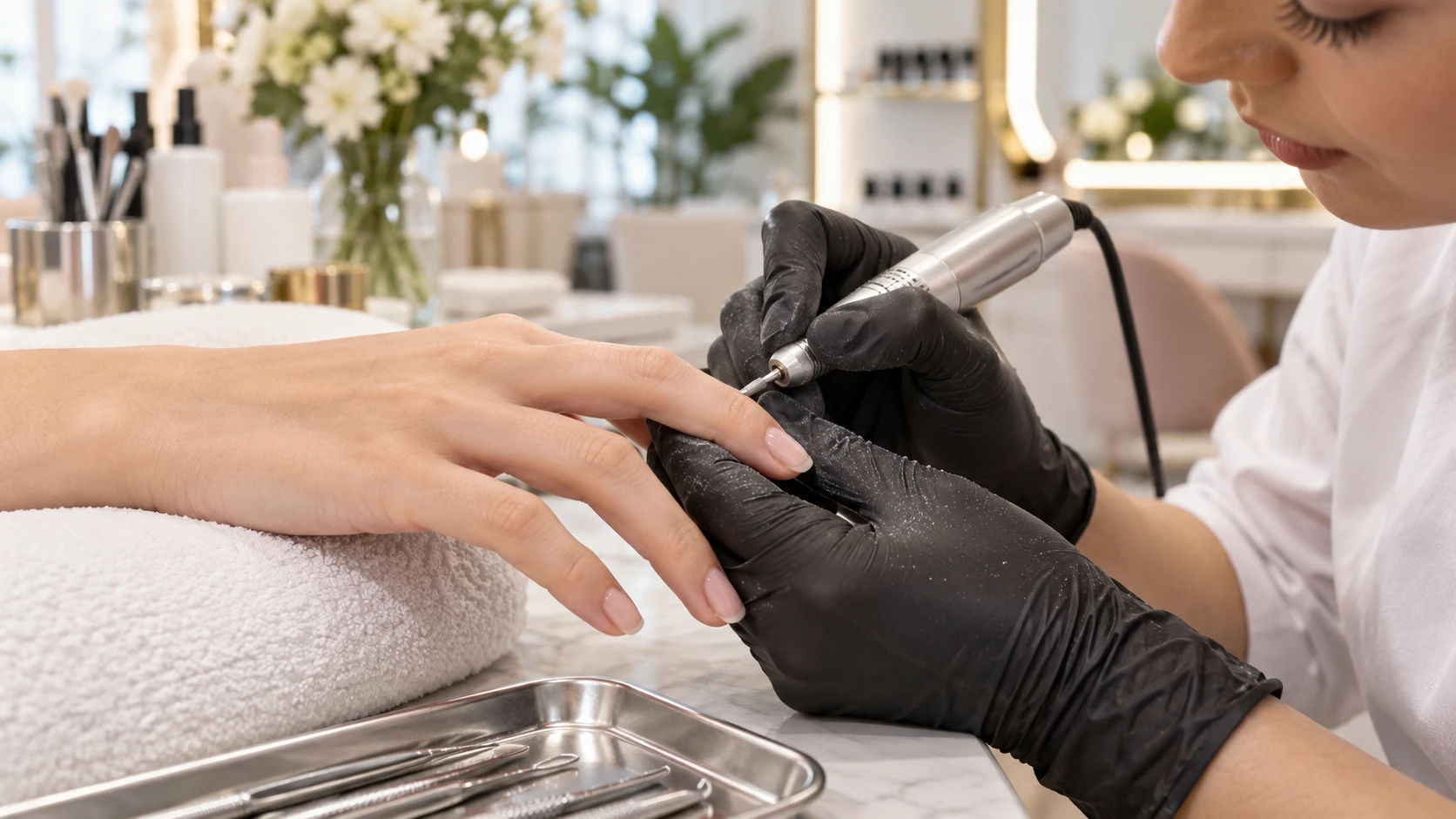
A dry manicure prepares the nail and surrounding cuticle area without soaking the fingers in a bowl of water first. The term describes a preparation method rather than one particular product. A technician may use hand tools, an electric file with appropriate bits, or a combination of both before applying gel polish, builder gel, hard gel or another nail service.
The purpose is controlled preparation: remove material that is sitting on the nail plate, refine excess non-living tissue around the nail when appropriate, shape the free edge and create a clean area for product application. It should not mean aggressive drilling, pain, bleeding or cutting deep into living skin.
What exactly is a dry manicure?
A traditional manicure may begin with soaking the fingertips to soften the skin around the nails. A dry manicure skips that soaking stage. The nail is prepared while dry, which allows the technician to see how the skin and nail plate naturally sit.
“Dry manicure” is a broad term. One salon may use mostly a pusher and hand tools. Another may use an electric file. A third may combine careful e-file work with nippers only where necessary. If a salon advertises a dry manicure, ask what the service actually includes rather than assuming every salon uses the same technique.
What happens during a typical dry manicure?
The exact sequence depends on the service, but a professional appointment may include:
- assessment of the nails and surrounding skin;
- sanitising hands and preparing the work area;
- removing old product if required;
- shaping the free edge;
- gently lifting or pushing back the proximal nail fold area as appropriate;
- removing non-living cuticle attached to the nail plate;
- refining loose dead skin with suitable tools;
- cleansing dust and preparing the nail for the selected product system.
A dry manicure can therefore add time compared with a very basic polish change. For realistic booking times, see How Long Does a Nail Appointment Take in Ireland?.
Does a dry manicure always use an e-file?
No. An electric nail file is common in modern salon preparation, but it is not the definition of a dry manicure.
When an e-file is used, the technician selects a bit and speed for a specific task. The aim is precision, not maximum power. The tool should remain controlled and should not be held in one place long enough to create uncomfortable heat.
Clients often see videos where a very clean cuticle line is created quickly. What is less visible is the pressure, angle, bit condition and knowledge needed to work near delicate skin without causing damage.
What should e-file work feel like?
You may notice vibration and light contact. You should not be expected to tolerate sharp pain, intense burning or repeated digging into one spot. If something hurts, say so immediately. A professional technician can stop and reassess rather than treating discomfort as a normal part of the service.
The “cuticle” is not the same as all the skin around the nail
In everyday salon language, “cuticle” is often used for several structures around the base of the nail. This can be confusing.
The thin non-living tissue that adheres to the nail plate can interfere with product adhesion and may be removed during preparation. The living skin forming the protective seal around the nail should not be treated as disposable material to remove as deeply as possible.
This distinction matters because over-processing the area can leave it tender, swollen or broken. A perfectly sharp photograph is not worth damaging the protective skin around the nail.
Why do technicians like dry preparation?
Possible advantages include:
- Better visibility. The technician sees the skin and nail in their normal dry state.
- Precise product placement. A clean nail plate can make it easier to leave a controlled margin and apply colour close to the cuticle area without touching skin.
- No water absorption before coating. The natural nail is not intentionally soaked immediately before a product that needs reliable adhesion.
- Useful for detailed shaping. Dry dust can be removed as the technician refines the nail and surrounding non-living tissue.
The result still depends on technique. “Dry manicure” is not automatically safer, longer-lasting or better simply because a salon uses the term.
What should clients watch for?
A manicure should not routinely leave open cuts. Warning signs during or immediately after preparation include:
- bleeding around several nails;
- persistent sharp pain;
- obvious grooves filed into the natural nail;
- strong burning from repeated friction in one area;
- uncured gel repeatedly touching the surrounding skin;
- reusing visibly contaminated single-use items;
- tools moving from client to client without an appropriate cleaning and disinfection process.
If the nail or surrounding skin already looks inflamed, infected, unusually discoloured or damaged, cosmetic product should not simply be used to hide it. The existing article Green Nail After BIAB or Gel explains why colour changes should be assessed rather than automatically covered.
Hygiene matters with both hand tools and e-files
The Health and Safety Authority in Ireland advises nail businesses to assess chemical risks, follow manufacturer instructions and use products safely. Hygiene also matters because manicure tools contact skin and nail debris.
As a client, reasonable things to notice include:
- a clean workstation prepared for the appointment;
- fresh disposable files or buffers where the salon treats them as single-use;
- properly processed reusable metal tools;
- dust management and ventilation appropriate to the service;
- products used from labelled containers;
- no pressure to continue over broken skin.
For a broader client checklist, see Nail Salon Hygiene: 10 Things Clients Can Check.
Dry manicure before gel polish or BIAB
Detailed preparation is often used before gel polish and builder-gel services because product adhesion depends on a clean, correctly prepared nail plate. However, more preparation is not always better.
A technician should follow the instructions of the product system being used. Excessively thinning or roughening the natural nail does not create a better foundation. Uncured gel should also be kept off the skin, and curing should follow the manufacturer’s compatible lamp and timing instructions.
If you are comparing overlay systems rather than preparation methods, read Hard Gel vs BIAB vs Acrylic in Ireland.
Is a dry manicure the same as a “Russian manicure”?
The terms are sometimes used loosely online, but they are not perfect synonyms. “Dry manicure” only tells you that soaking is not the main preparation method. “Russian manicure” is commonly used to describe a very detailed e-file-led cuticle preparation technique, often aiming for a highly refined product line around the base of the nail.
Because salon terminology is not standardized, ask what the technician will actually do. The tools, training and amount of tissue removal are more important than the marketing label.
Aftercare after a dry manicure
Once the coating is fully finished, ordinary nail and skin care still matters.
- Use cuticle oil regularly if it suits your skin.
- Wear gloves for prolonged wet work and cleaning.
- Do not pick gel or builder product away from the nail.
- Do not use an e-file on yourself simply to copy the salon technique.
- If the surrounding skin becomes persistently red, itchy, blistered or swollen, stop cosmetic exposure and seek appropriate medical advice.
For day-to-day care, see BIAB and Gel Nail Aftercare Between Appointments.
FAQ
Does a dry manicure hurt?
It should not require you to tolerate sharp pain or repeated burning. Some vibration or light sensation from tools is normal, but tell the technician immediately if a step is uncomfortable.
Is an e-file necessary for gel nails?
No. Different professional systems and techniques use different preparation and removal methods. The correct method depends on the service and manufacturer instructions.
Is soaking bad before gel?
Many gel services use dry preparation to keep the nail plate in its normal state before coating. Follow the product system and salon protocol rather than assuming one rule applies to every manicure.
Can a dry manicure remove all skin around the nail?
No. Living skin around the nail has a protective role. The goal is controlled grooming and preparation, not aggressive removal of all visible tissue.
How do I find a salon offering this service?
Browse Nails Ireland and ask salons directly whether they offer dry or e-file manicure preparation, what the appointment includes and how tools are processed between clients.