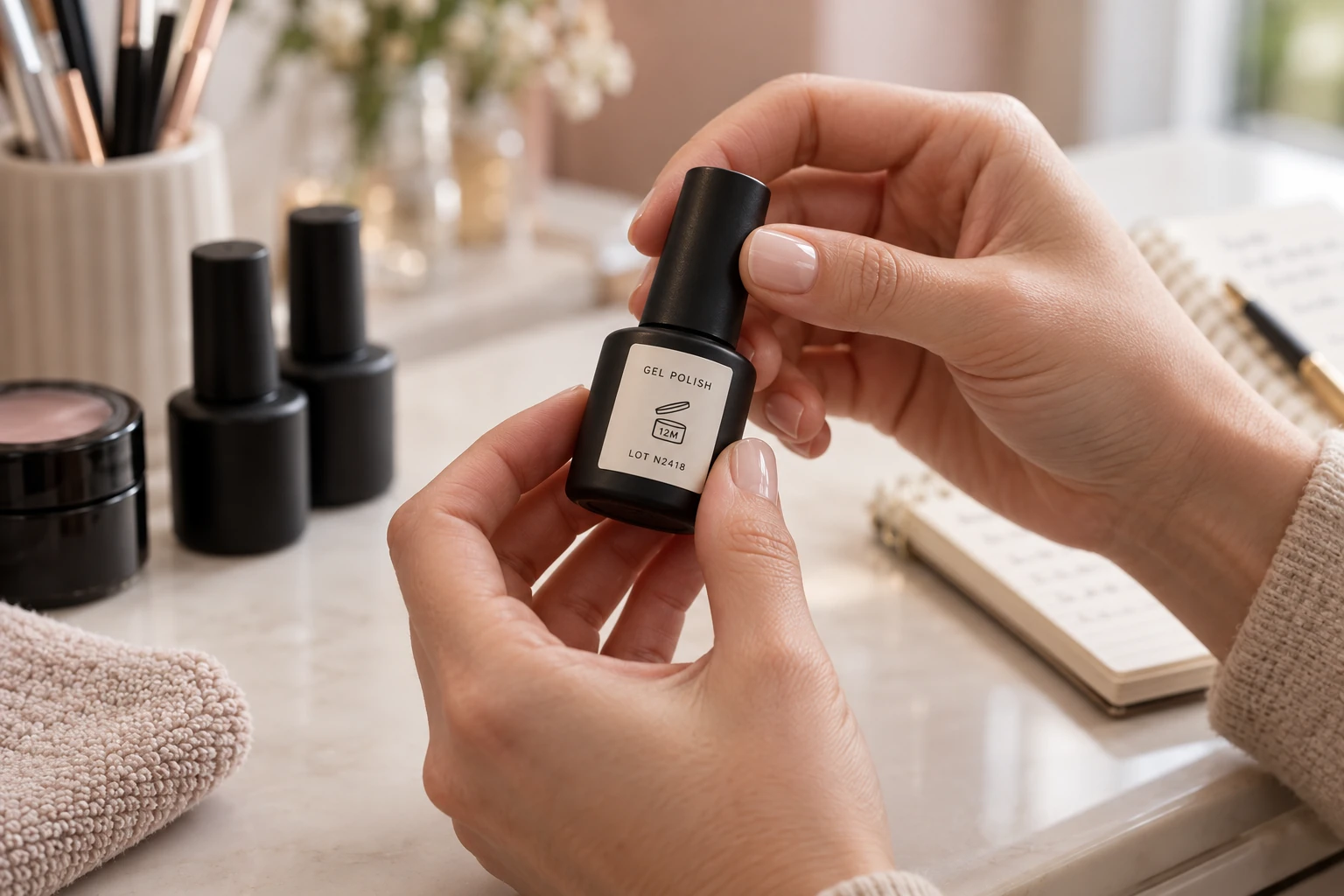
A gel polish bottle that still looks normal is not necessarily suitable for use. Professional nail products can have expiry-related markings, batch identifiers, warnings and storage instructions that help salons assess traceability and product condition. In Ireland, cosmetic product labelling is governed by EU cosmetics rules and overseen by the Health Products Regulatory Authority (HPRA). Understanding what each marking means is particularly important when a salon opens several similar-looking bottles at different times.
What is the difference between an expiry date and a PAO symbol?
The minimum durability date indicates the period during which a cosmetic product, stored under appropriate conditions, is expected to continue fulfilling its intended function. Under EU cosmetics rules, products with a minimum durability of more than 30 months generally use a period-after-opening indication where relevant, rather than displaying a minimum durability date. The PAO symbol is an open jar marked with a period such as 6M, 12M or 24M.
A 12M open-jar symbol means twelve months after opening under the relevant conditions; it is not the manufacturing date and does not mean the bottle was produced twelve months ago. Some formulations or packaging types are exempt from displaying a PAO where the concept is not relevant. Always read the particular product’s instructions rather than assuming every nail product uses the same format.
What does a batch code tell a nail technician?
A batch or lot number helps identify the production batch. It supports product traceability, which matters if the manufacturer issues an alert, a distributor identifies a quality problem or a salon needs to establish which bottle was used in a particular appointment. The batch code is not automatically a coded expiry date that can be decoded without the manufacturer’s information.
When a salon decants a product or transfers supplies between workstations, it becomes easier to lose the original label. Keeping the original container and recording the batch number in inventory records can avoid confusion later.
How to manage opened gel polish and BIAB in a busy salon
- Check the full manufacturer label before adding a new product to the workstation.
- Write the opening date in a salon inventory log or on an appropriate removable label that does not cover legally required information.
- Keep bottles closed when not in use and follow the specified temperature, light and storage precautions.
- Inspect products for changes that may indicate deterioration, but do not treat appearance as proof of safety.
- Discard material when the applicable durability guidance, manufacturer instructions or observed condition makes continued use inappropriate.
Products used in a BIAB and gel polish colour service may be opened frequently and handled under bright task lights. Follow the brand’s guidance on exposure to light and proper closure of the bottle. Never dilute a gel product with an unapproved liquid to restore its original consistency.
What information must be on cosmetic products sold in Ireland?
For cosmetic products placed on the Irish market, the applicable EU framework includes labelling of the responsible person, nominal content, durability or PAO information where relevant, precautions, the batch number, product function when it is not obvious and an ingredients list. The HPRA explains which particulars must appear in English, or in both Irish and English, under Ireland’s requirements.
Some information can be provided by the permitted accompanying methods where packaging size makes ordinary listing impracticable. That is a regulatory exception, not permission for salons to ignore safety notices. Products acquired through informal international supply channels deserve particular attention: a low price does not establish compliance with Irish-market labelling rules.
Can a salon use gel polish past the PAO period?
The safe professional approach is to follow the indicated PAO, minimum durability and manufacturer instructions. A product may become unsuitable earlier if exposed to excessive light, heat, contamination or poor storage. The absence of obvious separation or odour does not establish that the chemical composition and performance remain as intended.
Likewise, a change in curing behaviour should not be solved by guessing longer lamp times. Cure compatibility depends on the formulated product and the manufacturer’s specified equipment and procedure. Nail reactions and uncured product contact can raise separate safety concerns that an expiry date alone cannot address.
A practical inventory record for Irish nail salons
| Record | Why it matters |
|---|---|
| Brand and exact product name | Identifies the correct instructions and formulation |
| Batch or lot code | Supports traceability if a quality alert occurs |
| Date first opened | Makes a PAO period actionable |
| Durability or PAO marking | Helps determine when the product should stop being used |
| Storage location | Flags bottles exposed to unsuitable conditions |
Separating clearly labelled, current stock from products awaiting checks saves time during appointments. Where a salon offers both gel polish and builder-gel treatments, inventory records should identify the exact product rather than grouping different formulations together under one generic “gel” entry.
When to ask the supplier for clarification
Contact the responsible supplier if the PAO symbol is missing where expected, the batch code cannot be located, safety warnings are unreadable or the bottle was delivered with inconsistent packaging. Provide a photograph and the purchase information. A reliable supplier should be able to identify the product and direct you to its correct labelling and handling guidance.
The core distinction is straightforward: the PAO concerns time after opening; a minimum durability date concerns the unopened product under suitable storage; and a batch code traces production. None of these markings replaces correct technique, hygiene or the manufacturer’s curing instructions.