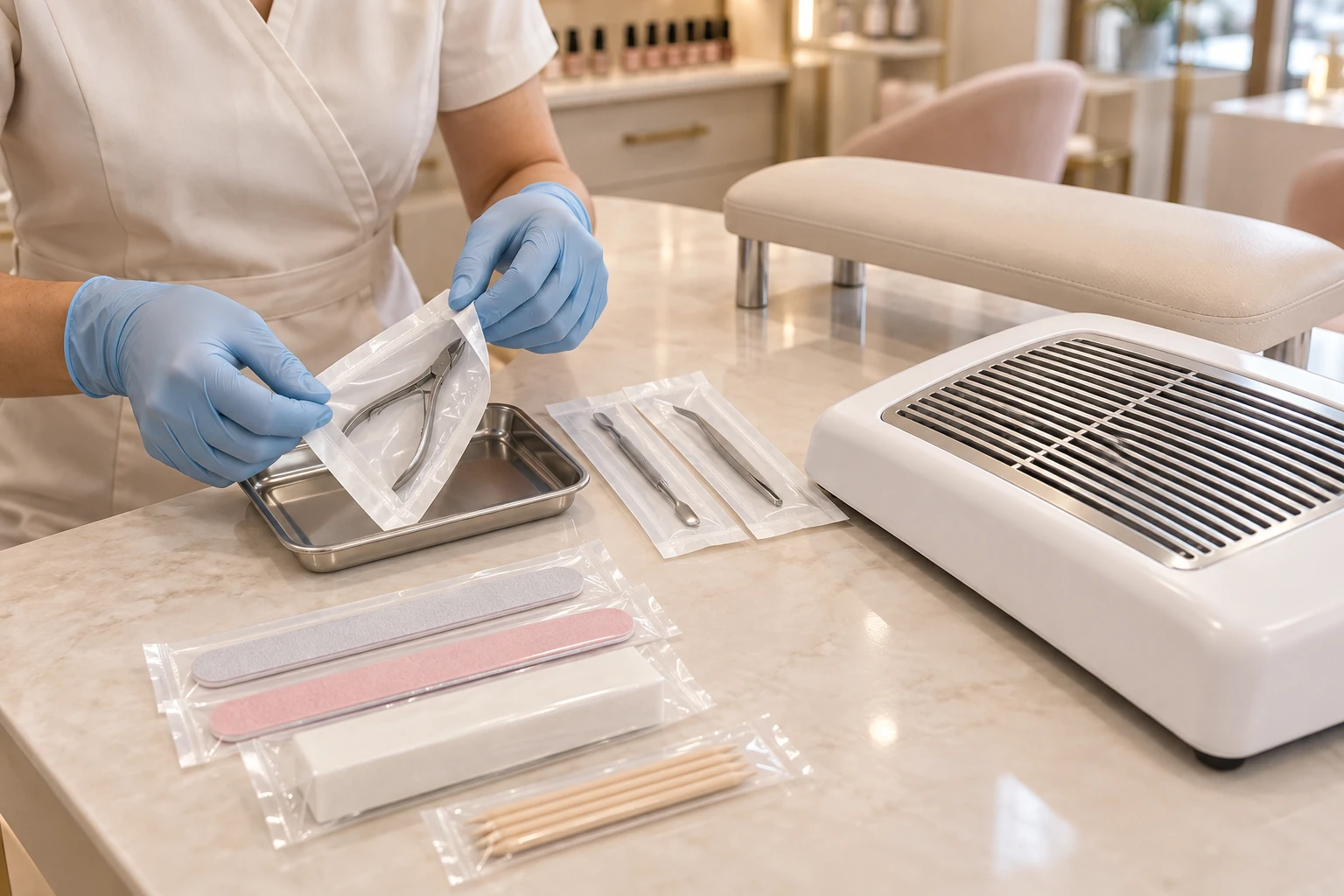
A clean-looking nail desk is not the same thing as a safe nail service. Good hygiene includes hand preparation, appropriate cleaning and disinfection of reusable tools, sensible treatment of disposable items, careful handling of breaks in the skin and controls for dust and chemical vapours. Irish clients can ask practical questions without turning an appointment into an inspection.
What clients should see before the service starts
A nail technician should have a clean work area, appropriate hand hygiene arrangements and a clear separation between used and ready-to-use implements. Dust and product residue from the previous appointment should not simply be brushed onto the next client’s hands. Products should be labelled and used according to the manufacturer’s directions, especially where a gel requires a particular lamp and curing system.
A professional salon may use different cleaning arrangements for different tool types. The important distinction is whether the method is suitable for the item and the risks involved, not whether everything is stored in an impressive-looking box.
Cleaning, disinfection and sterilisation are different
| Term | Purpose | Important limitation |
|---|---|---|
| Cleaning | Removes visible debris and organic material | Does not by itself guarantee disinfection |
| Disinfection | Reduces or destroys specified microorganisms using an appropriate process | Effectiveness depends on product, dilution and contact time |
| Sterilisation | Destroys all forms of viable microbial life under validated conditions | Requires suitable equipment, methods and monitoring |
| Single-use | One client or one use as specified | Should not be reprocessed contrary to its intended use |
Reusable metal implements and porous abrasive files do not necessarily follow the same process. It is sensible to ask how the salon handles files, buffers, nippers and drill attachments separately.
Are nail files supposed to be single-use?
Many abrasive paper files and buffers are difficult to clean thoroughly after use and are intended for one client or one use. Some salons use a labelled personal file set that is stored between the client’s appointments; suitability depends on the item, manufacturer instructions and hygiene practice. A visibly worn file from an unlabelled communal pile is a reasonable cause for concern. Disposable sanding bands used with electric files also require attention.
Why cuts and broken skin change the appointment
Nail treatments should not proceed as though broken skin, bleeding or a suspected infection were cosmetic details. A nick from an instrument needs appropriate immediate care and safe handling of contaminated materials. If there is significant redness, discharge, swelling or a painful nail fold, seek qualified clinical advice rather than covering the problem with another layer of product.
Clients should feel able to say that a step hurts. A manicure is not improved by cutting deeper or filing through discomfort.
Dust extraction and air quality matter
Filing and removing nail products can create fine dust. Liquid products can also release vapours. The Health and Safety Authority in Ireland discusses chemical risks in nail bars and measures such as extraction and workplace assessment. A small desktop fan blowing dust across the room is not the same as effective capture at source. Ventilation and suitable extraction should be considered together with product handling, training and cleanliness.
A strong smell alone is not an accurate exposure measurement, and the absence of smell does not prove a workplace is risk-free.
Questions to ask without accusing the technician
- Is this file new or is it kept only for me?
- How are reusable metal tools cleaned between appointments?
- What happens if a tool touches broken skin?
- Is the lamp compatible with the gel system being used?
- Is the dust collected near the filing area?
- Can you explain the removal method before we begin?
Clear answers build trust. A professional should be able to explain the process, although the equipment and precise procedures will vary with the services offered.
Gel polish hygiene includes allergy prevention
Uncured gel must be kept off the skin. Product thickness and cure times should follow the manufacturer’s instructions. Repeated skin exposure to uncured acrylates is a recognised sensitisation concern. Filing away healthy nail excessively or forcefully peeling gel can also cause damage. If a person has reacted to gel products before, the salon should not attempt to diagnose the allergy or simply change colour and proceed as usual.
Choosing a salon is about consistency
Look for a clean working area, well-managed tools, good communication, transparent treatment steps and willingness to stop when something is unsafe. Clients can compare professional services, but no single photograph of a beautifully decorated desk proves that infection-prevention procedures are being followed throughout the day.
Frequently asked questions
Does an ultraviolet sanitiser sterilise tools?
Do not assume so. The equipment and validated process must be appropriate for the intended purpose; storage under a light is not proof of sterilisation.
Can a salon reuse a disposable sanding band?
Items designated single-use should not be reused contrary to their intended use.
Should I continue an appointment if a nail is painful or inflamed?
Explain the symptom and avoid covering a suspected injury or infection. Professional medical assessment may be appropriate.